
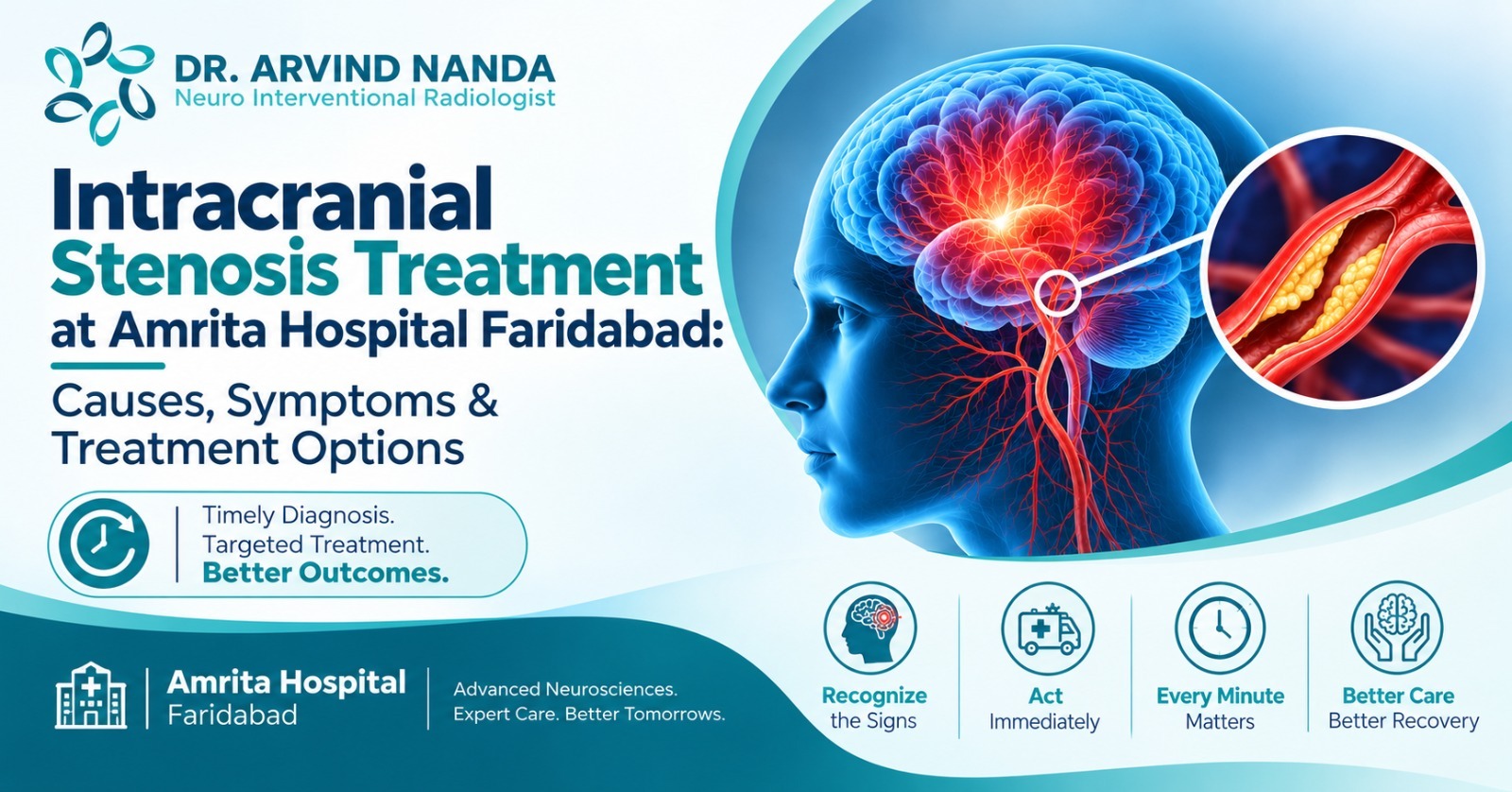
Intracranial stenosis is a serious condition in which one or more arteries inside the brain become narrowed, reducing blood flow to important areas of the brain. If left untreated, severe narrowing can increase the risk of transient ischemic attacks (TIAs) and ischemic stroke. Early diagnosis and appropriate treatment can play an important role in reducing these risks.
For patients looking for Intracranial Stenosis Treatment at Amrita Hospital Faridabad, advanced neurovascular evaluation and minimally invasive treatment options are available under the care of experienced specialists such as Dr. Arvind Nanda is a highly experienced Senior Consultant in Interventional Neuro and Vascular Radiology with over 20 years of expertise in managing complex neurovascular disorders.
Currently serving as a Senior Consultant at Amrita Hospital, Faridabad, Dr. Nanda specializes in advanced endovascular procedures, including:
- Brain aneurysm coiling
- Mechanical thrombectomy
- AVM embolization
- Carotid artery stenting
- Complex neurovascular interventions
His experience in interventional neurovascular procedures can be particularly valuable when patients require specialized evaluation and minimally invasive treatment.
What Is Intracranial Stenosis?
Intracranial stenosis refers to the narrowing of an artery located inside the skull. The narrowing can restrict the amount of oxygen-rich blood reaching the brain.
One of the common causes is atherosclerosis, where fatty deposits and plaque build up inside the artery. In some cases, other vascular conditions can also contribute to narrowing.
Depending on the severity and location of the blockage, intracranial stenosis may remain unnoticed or cause symptoms related to reduced blood flow to the brain.
What Causes Intracranial Artery Narrowing?
Several factors can increase the risk of developing narrowing in the brain’s arteries.
Common risk factors include:
- High blood pressure
- Diabetes
- High cholesterol
- Smoking or tobacco use
- Obesity
- Physical inactivity
- Increasing age
- A history of stroke or TIA
- Atherosclerosis
- Certain vascular disorders
Managing these risk factors is an important part of preventing the progression of vascular disease.
Symptoms of Intracranial Stenosis
Intracranial stenosis may not always cause noticeable symptoms in its early stages. However, reduced blood flow can sometimes result in symptoms similar to those of a TIA or stroke.
Possible warning signs include:
- Sudden weakness or numbness, particularly on one side of the body
- Difficulty speaking or understanding speech
- Sudden vision problems
- Dizziness or loss of balance
- Difficulty walking
- Sudden confusion
- Severe or unusual neurological symptoms
These symptoms should never be ignored. A sudden onset of weakness, speech difficulty, facial drooping or vision loss requires urgent medical evaluation, as it may indicate a stroke.
How Is Intracranial Stenosis Diagnosed?
A specialist may recommend different tests depending on the patient’s symptoms, medical history and suspected location of the narrowing.
Diagnostic evaluation may include:
CT Angiography
CT angiography can provide detailed images of the blood vessels supplying the brain and help identify areas of narrowing.
MR Angiography
MR angiography uses magnetic resonance imaging to evaluate blood vessels without conventional catheter-based angiography.
Digital Subtraction Angiography
Digital subtraction angiography (DSA) is an advanced imaging technique that provides detailed information about the brain’s blood vessels. It can be particularly useful when a more precise assessment is required before an intervention.
Brain Imaging
CT or MRI of the brain may also be performed to determine whether previous or recent areas of ischemic injury are present.
Treatment Options for Intracranial Stenosis
Treatment depends on several factors, including the severity and location of the narrowing, symptoms, previous stroke or TIA, overall health and the risk of future stroke.
1. Medical Management
For many patients, treatment begins with controlling the factors that contribute to vascular disease.
This may involve:
- Blood pressure management
- Diabetes control
- Cholesterol reduction
- Smoking cessation
- Healthy diet
- Regular physical activity
- Antiplatelet medicines when prescribed
- Other medications based on individual risk factors
Patients should take medications only under the guidance of their treating physician.
2. Endovascular Treatment
In selected patients with significant narrowing and recurrent symptoms despite appropriate medical treatment, an endovascular procedure may be considered.
Depending on the individual case, a catheter-based approach can be used to access the affected blood vessel. In carefully selected situations, angioplasty or stenting may be considered to improve blood flow.
Because intracranial blood vessels are delicate and treatment carries potential risks, intervention should be considered only after detailed evaluation by an experienced neurovascular team.
Why Early Evaluation Matters
Intracranial artery narrowing can increase the risk of reduced blood flow to the brain and stroke. Identifying the condition early allows doctors to assess the patient’s individual risk and develop an appropriate treatment strategy.
Patients with previous TIA, stroke or significant vascular risk factors may benefit from timely neurovascular evaluation, particularly when they experience new neurological symptoms.
Why Choose a Specialized Neurointerventional Team?
Conditions affecting the blood vessels of the brain require highly specialized evaluation and treatment. Neurointerventional specialists use advanced imaging and minimally invasive techniques to diagnose and manage complex vascular conditions.
At Amrita Hospital, Faridabad, patients can undergo specialized evaluation for neurovascular disorders and receive treatment based on their individual clinical condition.
With his extensive experience in interventional neuro and vascular radiology, Dr. Arvind Nanda provides expertise in complex endovascular procedures and neurointerventional care.
When Should You See a Doctor?
You should seek medical evaluation if you experience unexplained or recurrent:
- Sudden weakness or numbness
- Speech difficulties
- Temporary vision loss
- Loss of balance
- Dizziness associated with neurological symptoms
- Previous TIA or stroke
- Recurrent neurological symptoms
Sudden neurological symptoms should be treated as a medical emergency. Seek immediate emergency care rather than waiting for a routine appointment.
Conclusion
Intracranial stenosis is a potentially serious vascular condition that can affect blood flow to the brain and increase stroke risk. Early diagnosis, management of vascular risk factors and appropriate treatment can help reduce complications.
For patients considering Intracranial Stenosis Treatment at Amrita Hospital Faridabad, consultation with an experienced neurointerventional specialist can help determine the most appropriate diagnostic and treatment approach.
With more than two decades of experience and advanced training in neurovascular intervention, Dr. Arvind Nanda, Senior Consultant in Interventional Neuro and Vascular Radiology at Amrita Hospital, Faridabad, specializes in minimally invasive procedures for complex neurovascular conditions.
Frequently Asked Questions
1. What is intracranial stenosis?
Intracranial stenosis is the narrowing of an artery located inside the skull that supplies blood to the brain. Significant narrowing can reduce blood flow and may increase the risk of TIA or ischemic stroke.
2. What are the common symptoms of intracranial stenosis?
Some people may have no symptoms. Others can experience sudden weakness or numbness, speech problems, vision changes, dizziness, balance difficulties or other neurological symptoms.
3. Can intracranial stenosis be treated without surgery?
Yes. Depending on the severity and symptoms, treatment may involve medications and management of risk factors such as high blood pressure, diabetes and high cholesterol. Selected patients may require an endovascular procedure.
4. When is stenting considered for intracranial stenosis?
Stenting is not required for every patient. In selected cases with severe narrowing and recurrent symptoms despite appropriate medical treatment, an experienced neurovascular team may consider an endovascular procedure after carefully assessing the potential benefits and risks.
5. What tests are used to diagnose intracranial stenosis?
Doctors may use CT angiography, MR angiography, digital subtraction angiography and brain CT or MRI, depending on the patient’s condition.
6. Who provides Intracranial Stenosis Treatment at Amrita Hospital Faridabad?
Dr. Arvind Nanda, Senior Consultant in Interventional Neuro and Vascular Radiology at Amrita Hospital, Faridabad, specializes in advanced neurovascular interventions and the management of complex blood vessel conditions affecting the brain.
7. Is intracranial stenosis dangerous?
Significant intracranial stenosis can increase the risk of TIA and ischemic stroke. The level of risk varies between patients, making specialist evaluation important for determining the appropriate treatment plan.
8. What should I do if I suddenly develop weakness or difficulty speaking?
Sudden weakness, facial drooping, difficulty speaking, sudden vision loss or severe loss of balance can be signs of a stroke. Seek emergency medical care immediately.