
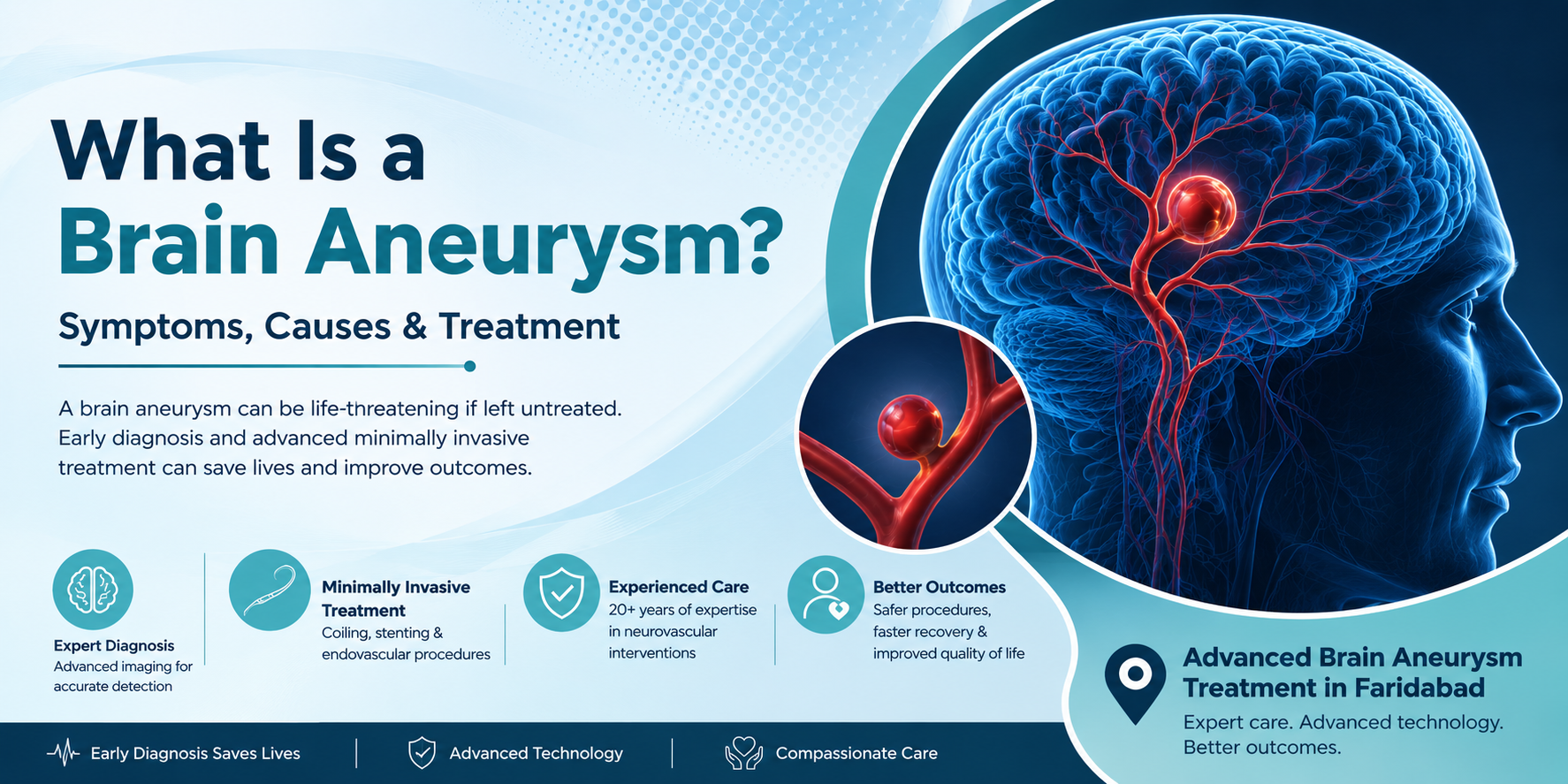
What Is a Brain Aneurysm? Symptoms, Causes & Treatment
A brain aneurysm is a potentially life-threatening condition that requires early diagnosis and expert treatment. If an aneurysm ruptures, it can cause a brain hemorrhage, stroke, permanent neurological damage, or even death. Fortunately, advancements in minimally invasive endovascular treatment have significantly improved patient outcomes.
For those seeking brain aneurysm treatment in Faridabad, Dr. Arvind Nanda is a highly experienced Senior Consultant in Interventional Neuro and Vascular Radiology with over 20 years of expertise in treating complex neurovascular disorders. He has completed his MBBS, D.M.R.E., MD in Radiodiagnosis, PDCC in Interventional & Vascular Radiology, and Senior Residency in Neuroradiology at AIIMS, New Delhi, along with advanced training in France, the USA, the UK, and Switzerland. Currently serving as a Senior Consultant at Amrita Hospital, Faridabad, Dr. Nanda specializes in advanced endovascular procedures, including brain aneurysm coiling, mechanical thrombectomy, AVM embolization, and carotid artery stenting.
What Is a Brain Aneurysm?
A brain aneurysm develops when the wall of an artery weakens due to factors such as high blood pressure, aging, or genetic conditions. Over time, the pressure of blood flow causes the weakened area to bulge.
Most aneurysms occur at the base of the brain where arteries branch, making these locations more vulnerable to vessel wall weakness.
Many people may live with an unruptured aneurysm without ever knowing it. However, if an aneurysm enlarges or ruptures, it becomes a medical emergency requiring immediate treatment.
Types of Brain Aneurysms
1. Saccular (Berry) Aneurysm
- Most common type
- Round, sac-like bulge
- Usually develops at artery branching points
2. Fusiform Aneurysm
- Involves widening of the entire blood vessel
- Less common but more complex
3. Dissecting Aneurysm
- Caused by a tear in the inner lining of the artery
- Can disrupt blood flow and increase stroke risk
Symptoms of an Unruptured Brain Aneurysm
Small aneurysms often produce no symptoms.
Larger aneurysms may cause:
- Persistent headache
- Pain behind or above the eye
- Double vision
- Blurred vision
- Drooping eyelid
- Facial numbness
- Dilated pupil
These symptoms occur when the aneurysm presses on nearby nerves.
Symptoms of a Ruptured Brain Aneurysm
A ruptured aneurysm requires immediate emergency care.
Warning signs include:
- Sudden severe headache (“worst headache of life”)
- Loss of consciousness
- Nausea and vomiting
- Neck stiffness
- Confusion
- Seizures
- Sensitivity to light
- Weakness on one side of the body
- Difficulty speaking
- Vision loss
Never ignore these symptoms. Early treatment can be lifesaving.
Causes of Brain Aneurysm
The exact cause isn’t always known, but several factors weaken blood vessel walls.
Common causes include:
- High blood pressure
- Smoking
- Aging
- Atherosclerosis (hardening of arteries)
- Head injury
- Congenital weakness of blood vessels
- Family history
- Certain connective tissue disorders
Risk Factors
You may have a higher risk if you have:
- Hypertension
- Diabetes
- High cholesterol
- Smoking habit
- Excessive alcohol consumption
- Obesity
- Family history of aneurysm
- Polycystic kidney disease
- Female gender (especially after menopause)
Managing these risk factors significantly reduces complications.
How Is a Brain Aneurysm Diagnosed?
Early diagnosis plays a crucial role in preventing rupture.
Your specialist may recommend:
CT Scan
Detects brain bleeding after rupture.
MRI Brain
Provides detailed images of brain tissue.
CT Angiography (CTA)
Visualizes blood vessels and aneurysms.
MR Angiography (MRA)
Useful for screening and follow-up.
Digital Subtraction Angiography (DSA)
DSA is considered the gold standard for diagnosing brain aneurysms. It provides highly detailed images of blood vessels and also helps plan treatment.
Advanced Brain Aneurysm Treatment in Faridabad
Modern treatment depends on:
- Size of aneurysm
- Location
- Whether it has ruptured
- Patient’s age
- Overall health
Today, many aneurysms can be treated using minimally invasive endovascular techniques.
Endovascular Aneurysm Coiling
This is one of the most advanced treatments for brain aneurysms.
A tiny catheter is inserted through the artery in the wrist or groin and guided to the aneurysm under X-ray guidance.
Soft platinum coils are then placed inside the aneurysm to block blood flow and prevent rupture.
Benefits include:
- No large surgical incision
- Less pain
- Faster recovery
- Shorter hospital stay
- Lower risk of complications
Balloon-Assisted Coiling
For wide-neck aneurysms, a temporary balloon helps safely place coils.
Stent-Assisted Coiling
A tiny stent is used to support the artery while coils seal the aneurysm.
Flow Diverter Stents
Large or complex aneurysms may require specialized flow-diverting stents that redirect blood flow away from the aneurysm, allowing it to heal naturally.
Why Early Treatment Matters
A ruptured brain aneurysm carries a high risk of:
- Stroke
- Permanent disability
- Brain damage
- Memory problems
- Paralysis
- Death
Early diagnosis and minimally invasive treatment significantly improve survival and long-term neurological recovery.
Why Choose Dr. Arvind Nanda for Brain Aneurysm Treatment in Faridabad?
Dr. Arvind Nanda is a Senior Consultant in Interventional Neuro and Vascular Radiology with more than 20 years of experience in treating complex neurovascular disorders.
His expertise includes:
- Brain aneurysm coiling
- Balloon-assisted coiling
- Stent-assisted aneurysm treatment
- Mechanical thrombectomy for acute stroke
- AVM embolization
- Carotid artery stenting
- Intracranial stenting
- Treatment of brain hemorrhage
Having trained at prestigious institutions including AIIMS New Delhi, Beaujon Hospital (Paris), Baylor College of Medicine (USA), Royal Preston (UK), and University Hospital Zurich, Dr. Nanda brings international expertise in minimally invasive neurointerventional procedures.
He currently serves as a Senior Consultant at Amrita Hospital, Faridabad, where he focuses on advanced image-guided treatments that minimize surgical trauma and promote faster recovery.
Prevention Tips
While not every aneurysm can be prevented, healthy lifestyle choices reduce the risk.
- Control blood pressure
- Stop smoking
- Manage diabetes
- Lower cholesterol
- Exercise regularly
- Maintain a healthy weight
- Eat a heart-healthy diet
- Avoid excessive alcohol
- Have regular health checkups
- Seek medical advice if you have a family history of aneurysms
Frequently Asked Questions (FAQs)
Can a brain aneurysm be cured?
Yes. Many aneurysms can be successfully treated with endovascular coiling or flow-diverting stents, especially when diagnosed early.
Is brain aneurysm treatment safe?
Modern minimally invasive treatments have excellent safety profiles when performed by experienced neurointerventional specialists.
How long does recovery take?
Most patients recover much faster after endovascular treatment compared to open brain surgery, although recovery varies depending on whether the aneurysm has ruptured.
Can a brain aneurysm return after treatment?
Most treated aneurysms remain stable, but regular follow-up imaging may be recommended to ensure long-term success.
When should I seek emergency medical help?
Seek immediate medical attention if you experience:
- Sudden severe headache
- Loss of consciousness
- Weakness on one side
- Difficulty speaking
- Seizures
- Vision loss
Prompt treatment can save your life.
Conclusion
A brain aneurysm is a potentially life-threatening condition, but advances in endovascular neuroradiology have transformed the way it is treated. Early diagnosis, expert evaluation, and minimally invasive procedures can prevent rupture, reduce complications, and improve long-term outcomes.
If you or a loved one experiences symptoms suggestive of a brain aneurysm or has been diagnosed with one, don’t delay seeking expert care. For advanced brain aneurysm treatment in Faridabad, consult Dr. Arvind Nanda, an experienced Interventional Neuro and Vascular Radiologist specializing in minimally invasive neurovascular procedures designed for safer treatment and faster recovery.